
What to See in Verona in One Day: 10 Unmissable Experiences to Discover the City
Visit Verona in just one day It's a surprisingly rewarding experience. The city is compact, harmonious, easily traversed on foot, and capable of concentrating centuries of history, art, architecture, and unforgettable atmospheres into just a few kilometers. Verona is more than just the Arena or Juliet's balcony: it's a city of luminous vistas, medieval squares, panoramic views, elegant neighborhoods, and bridges spanning a slow, scenic river.
This guide collects The 10 best things to see in Verona in one day, an itinerary designed to guide you through the city in a fluid and optimized way, alternating iconic places with authentic corners, and offering practical advice to best organize your 24 hours.
Whether you're visiting Verona for the first time or want to rediscover it with a more detailed look, here you'll find a comprehensive, clear itinerary designed to make the most of every minute.
Plan Your Itinerary: Verona in 24 Hours
The first thing to know is that Verona should be experienced on footDistances are short, the city center streets are perfect for walking, and many views can only be appreciated by slowing down.
To make the most of your day, consider a few tips:
-
Visits begin by 9:00 am: the interiors (Arena, Torre dei Lamberti, Juliet's House) are more liveable in the morning.
-
Organize your day in blocks:
-
Morning: Arena → Via Mazzini → Piazza delle Erbe → Lamberti Tower
-
AfternoonJuliet's House → Scaliger Tombs → Castelvecchio
-
Evening: Duomo → Ponte Pietra → Castel San Pietro
-
Morning: Arena → Via Mazzini → Piazza delle Erbe → Lamberti Tower
-
Take time to observeVerona is not a city to run, but to cross while listening to the rhythm of the historic center, the river and the squares.
With this itinerary, you will not only be able to see everything, but you will be able to do so with pleasure, without stress and truly enjoying each place.
The Top 10 Things to See in One Day in Verona
Below you'll find a detailed itinerary, divided into 10 key stops. Each section includes context, suggestions, and narrative cues that make the visit more immersive.
1. Verona Arena and Piazza Brà — The Best Possible Start
The Verona Arena is one of the world's best-preserved Roman amphitheaters, still awe-inspiring with its monumentality. Arriving in the morning, the square is bright, quiet, and perfect for capturing balanced, uncrowded photos.
Piazza Brà offers wide spaces, soft colors, and a relaxed atmosphere that prepares you for what's to come. It's here that you begin to sense the Veronese rhythm: elegant, measured, welcoming.
2. Via Mazzini — The City Promenade
Taking Via Mazzini means entering the most dynamic part of Verona. With its boutiques, historic shops, and buildings with architectural details worth observing, this street represents the perfect transition between the monumental Arena and the beating heart of the city center.
It is also one of the most pleasant stretches to walk along to orient yourself in the city.
3. Piazza delle Erbe and the Madonna Verona Fountain — The Historical Soul
Piazza delle Erbe is considered one of the most beautiful squares in Italy: a blend of colors, scents, voices, and architecture that coexist in harmony. The frescoed facades of the medieval buildings, the Gardello Tower, the Casa dei Mercanti, and the famous fountain of Madonna Verona they give a unique charm.
It's the ideal place to take a break, take evocative photos, and experience the city's most authentic atmosphere.
4. Torre dei Lamberti — Verona's Most Iconic View
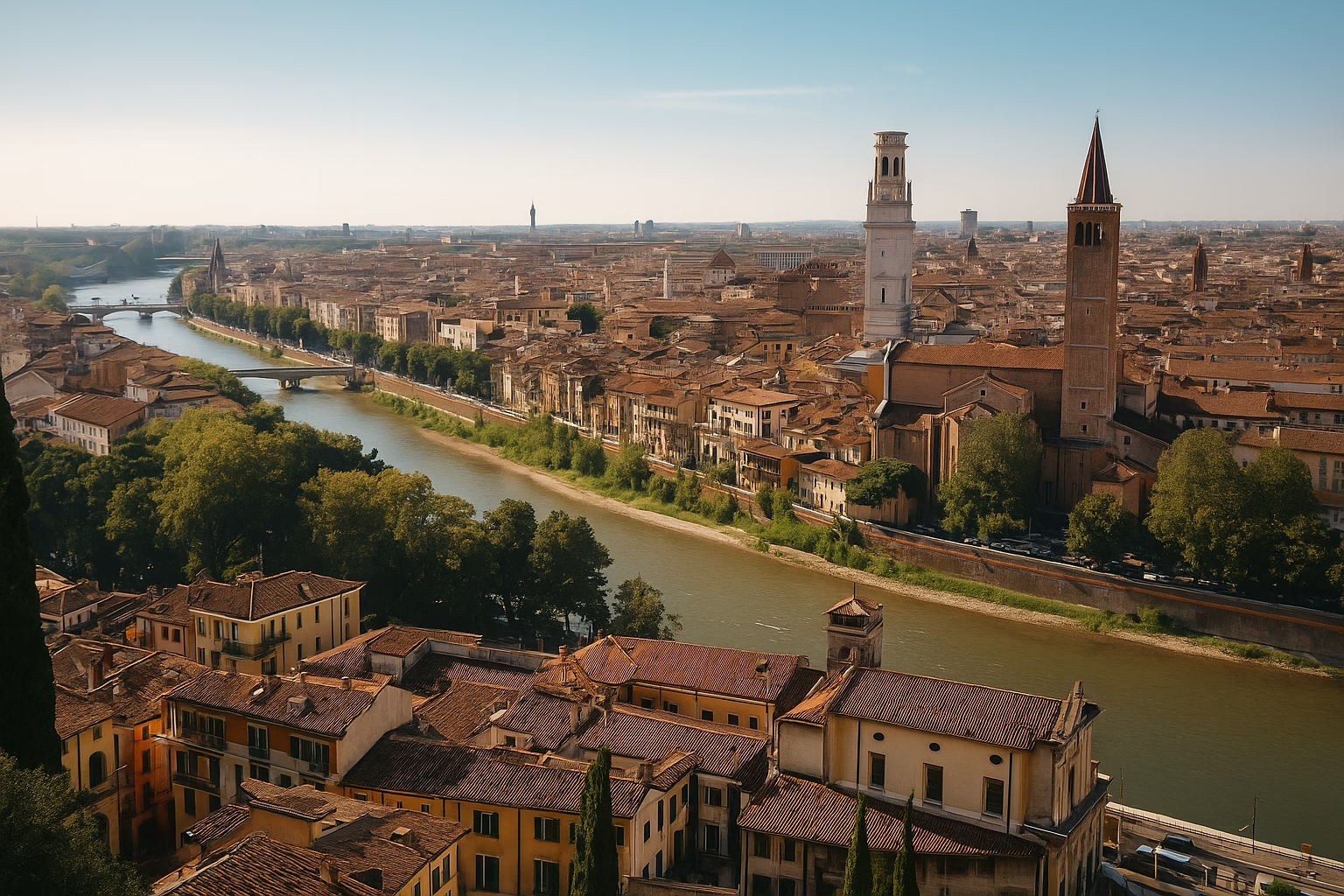
The Torre dei Lamberti dominates the historic center at a height of 84 meters. Climbing up (on foot or by elevator) is an experience well worth the time: from above, Verona reveals its medieval structure, its pink rooftops, its piazzas, its narrow streets, and the Adige River that embraces the city.
It is one of the most memorable views in Italy.
5. Juliet's House — The Most Famous Literary Symbol
Although it's one of the most popular attractions, Juliet's House is worth a visit for its cultural significance and the romantic atmosphere it retains. The courtyard, balcony, and inscriptions left by visitors reveal a universal connection to Shakespeare's story.
A quick but unmissable stop.
6. Scaliger Tombs and Piazza dei Signori — Medieval Verona
The Scaliger Tombs are one of the most important testimonies to the era when the Della Scala family ruled Verona. The richly decorated Gothic tombs are located in a perfect setting: the elegant, solemn Piazza dei Signori, dominated by the statue of Dante.
A less crowded area, ideal for appreciating medieval Verona.
7. Castelvecchio and Ponte Scaligero — Architecture, History, and Landscape
The Castelvecchio complex is imposing, refined, and spectacular. The connecting bridge, with its red walls and massive structure, is one of the city's photographic icons.
It's a stop that combines history, a pleasant walk, and spectacular views of the Adige River.
8. Verona Cathedral — Art and Spirituality
The Duomo offers a perfect blend of Romanesque, Gothic, and Renaissance styles. Inside, there are extraordinary works, including Titian's famous Annunciation.
Visiting the Duomo in the late afternoon allows you to enjoy the softer light and the quieter atmosphere.
9. Ponte Pietra — The Most Impressive Crossing
Ponte Pietra is the city's oldest bridge and one of the most fascinating in Italy. Crossing it introduces you to a change of scenery: from monumental Verona to natural Verona, where the river and the hills take center stage.
It is one of the best places to enjoy the sunset light.
10. Castel San Pietro — The Final Panorama
Climbing up to Castel San Pietro (on foot or by funicular) will reward you with the most complete view of the city: a romantic, soft, and unforgettable sight.
It's the perfect ending to an itinerary that explores every nuance of Verona.
Where to Eat in Verona and What to Try
Eating in Verona means experiencing rich traditions and profound flavors. Here's what you can't miss:
-
Risotto with Amarone – elegant and velvety, a symbol of Veronese cuisine.
-
Pastisada de caval – a historic dish, intense and perfect in typical taverns.
-
Veronese gnocchi – soft and traditional, often prepared using family recipes.
For a quick lunch, the area between the Arena and Via Mazzini is convenient; for a charming aperitif, Piazza delle Erbe or Lungadige are ideal.
Where to Sleep in Verona (And Why You Should Stay for the Evening)
After a full day spent exploring art, scenic climbs, and strolling along the Adige River, stopping for the night becomes a natural choice. Verona, as the sun sets, is transformed: the squares light up, the streets become quieter, the bridges gleam, and the city reveals a more intimate elegance.
Good accommodation allows you to experience this atmosphere without rushing, transforming a simple itinerary into a more complete experience.
For those who wish to end the day in a well-kept, quiet and central environment, Casa di David is an ideal choice. Its accommodations combine comfort, aesthetics, and a discreet welcome, perfect for those who want to experience Verona in peace, style, and authenticity.
Conclusions
Verona is a city that surprises with its harmony, perfect size, and cultural richness. In just one day, you can discover its most iconic sights, wander through medieval squares, admire enchanting views, and explore history, art, and architecture without ever straying too far from the city center.
This 10-stop itinerary is designed to guide you precisely, without sacrificing the beauty of spontaneity. But Verona always deserves a few extra hours: in the evening, it becomes even more fascinating, more intimate, more exciting. Visiting Verona in one day is possible.
Loving her forever, inevitable.

 Italian
  English